1
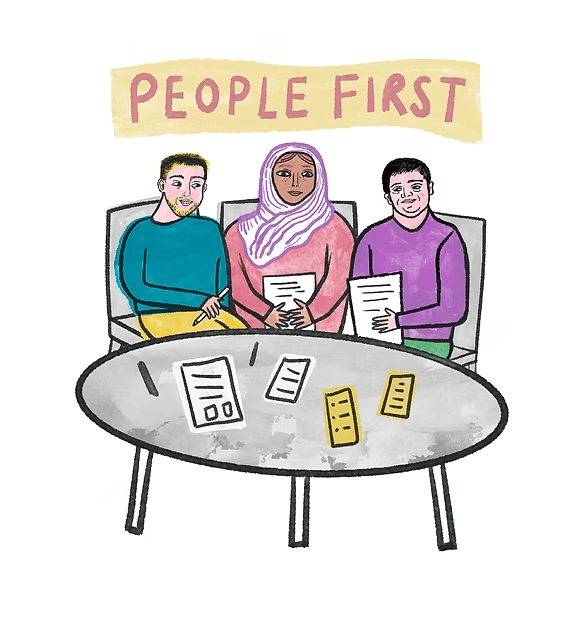
Self-advocates are people with intellectual disabilities who speak up for themselves about the things that are important to them.
Self-advocacy is about:
understanding your own rights and the rights of other people with intellectual disabilities
coming together in groups and giving one another peer support
sharing experiences and learning from one another
building confidence and power
taking action by holding organisations and governments accountable
A person must be supported to understand the responsibilities of being a self-advocate and representing others.
Not all people with intellectual disabilities are (or want to be) self-advocates.
2
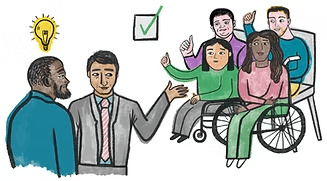
An inclusive organisation will support self-advocacy.
This may be by providing time and space for people to develop their self-advocacy skills, or by employing self-advocacy organisations to support their work.
3
Organisations should give self-advocates opportunities to speak up. This shows that an organisation values the opinions of self-advocates.
For example;
in your activities, like projects
in decision making in your organisation
in campaigns or advocacy
in communications, like sharing experiences though social media posts
4
Connecting with self-advocacy groups can be difficult depending on where you are.
Family or service provider organisations often support self-advocacy groups and can help you connect.
Be aware that sometimes organisations talk about their "self-advocacy work" but this work is more about social and leisure activities, not about rights. For example, some organisations call their exercise or drama groups "self-advocacy".
Self-advocacy groups often grow out of social groups. But people with intellectual disabilities taking part in these groups may not have had a chance to learn about their rights or understand about representing others.
5
Self-advocacy is not about what organisations think!
Organisations that work closely with self-advocacy groups, provide funding or opportunities must understand that self-advocacy is about what people with intellectual disabilities think, not what the organisation thinks.
6
Remember that if you are including self-advocates in your work, you must support them and make sure they can fully take part.
To understand how to do this well, review the guidelines sections for different areas of your work and listen to what self-advocates say they need from you.

Resources for self-advocate groups
Global Report on self-advocacy
Guide to self-advocacy in Spanish
Guide to self-advocacy in English